NC Says No to Rate Hikes: Turning Neighbor Conversations Into Regulatory Pressure
Since 2020, Duke Energy has raised electricity rates by 22% in North Carolina. This year alone, disconnection notices are up roughly 10% — families forced to choose between running the A/C and paying on time.
Despite posting nearly $5 billion in profit last year, Duke Energy requested regulators approve an additional 18% rate increase, in a state where median household income sits below the national average.
Progress NC Action, a North Carolina advocacy organization focused on building power for working families, launched "NC Says No to Rate Hikes" to fight the increase — building the public case against it and creating a profit calculator so residents could see exactly what the rate hike would cost them personally.
Empower partnered with Progress NC Action to turn that campaign into direct, one-on-one action.
The Program
Empower's Community Mobilizer network ran a two-part Call to Action (CTA) to convert Progress NC Action's public campaign into personal conversations and direct regulatory pressure:
Step 1: Mobilizers reached out to friends and family with one simple question: Has your electricity bill been going up? Every "yes" opened the door to share Progress NC Action's research and materials.
Step 2: Mobilizers asked their contacts to run Progress NC Action's rate hike calculator themselves, see their personal cost impact, and record a video sharing what they found, then call the North Carolina Attorney General's office directly to register their opposition.
The Results
2,325 friends and family reached through one-on-one conversations and mobilizer-generated videos
Thousands of resulting calls to the NC Attorney General's office
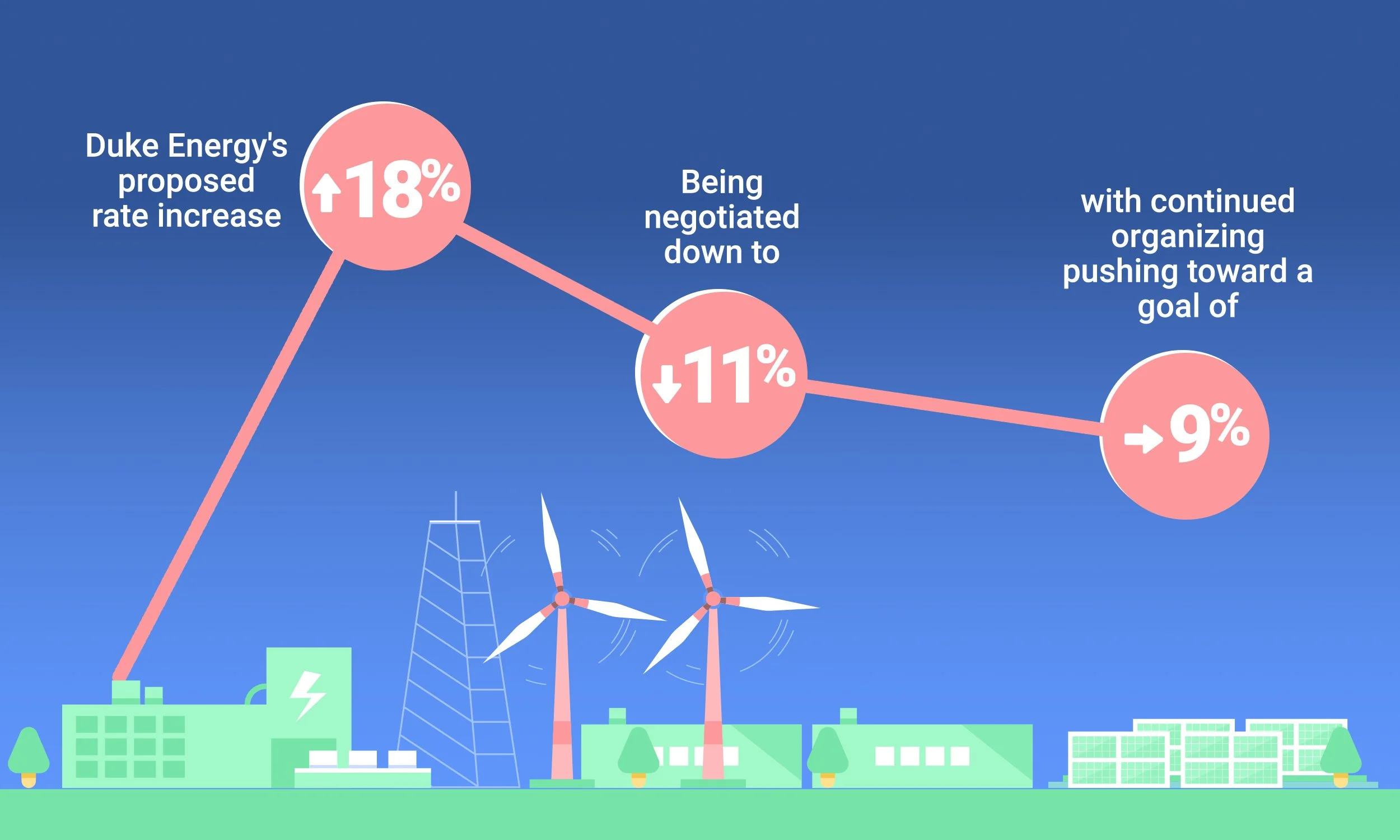
Per Progress NC Action, that pressure helped move the AG's office to negotiate Duke Energy's proposed rate increase down from 18% to 11%, with continued organizing now pushing for 9%
Why It Worked
Paid media and digital ads can raise awareness, but they can't replicate trust between two people who already know each other. By pairing Progress NC Action's statewide research and public campaign with Empower's relational network, a single conversation between neighbors became direct, measurable pressure on a state regulator and a real, quantifiable reduction in what North Carolina families will pay.
What's Next
Organizing continues, with Progress NC Action and Empower pushing for a further reduction to 9%. The campaign is a model for how relational organizing can complement paid and earned media strategies on economic and utility-focused issues beyond electoral campaigns.
Sources: ABC11 (2026); NPR (Aug. 2025); WUNC (Feb. 2026); WRAL (Feb. 2026); U.S. Census Bureau American Community Survey 2024 5-Year Estimates; BW Research Partnership study for NC Sustainable Energy Association & Environmental Defense Fund; Energy and Policy Institute; Progress NC Action.
