
The Landscape
Winning a primary on the Upper West Side means competing for voters who are famously hard to reach. Doorman buildings keep canvassers off the floors where voters live, and the traditional door knock, the backbone of most local campaigns, often never happens.
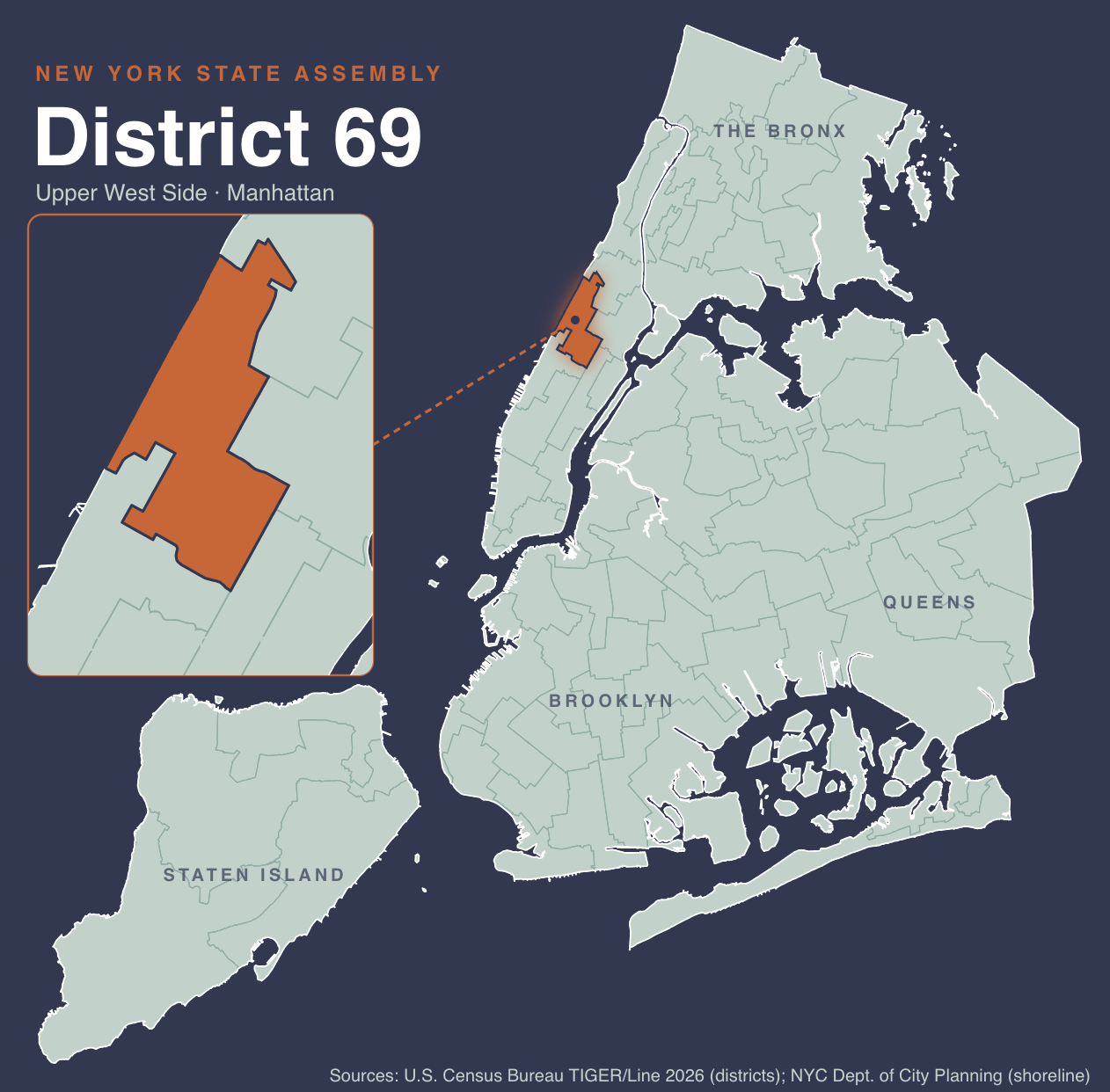
Eli Northrup’s campaign for New York State Assembly District 69 ran into that problem early. Their answer was high-traffic canvassing: talking to voters wherever they could be found, in the neighborhood’s busy public spaces. It reaches more people, but it has a cost. A conversation on a crowded sidewalk doesn’t automatically become a record in the voter file.
The Gap
The campaign started using Empower on Mar 23, 2026 roughly three months before the primary.
About two months out, the team took stock and saw they were significantly behind their target for positive IDs, even though there was a high number of voters passing by daily who had told them they would support Eli. They knew their persuasion work was working, but it wasn’t showing up in their numbers, and they couldn’t tell where they actually stood or communicate how they were doing to key stakeholders. That’s where Empower came in.
"Empower enabled us to track these interactions using names and general addresses."
- Devyn Barram, Outreach Director
What Empower Changed
Empower gave the campaign a way to log those conversations without going through VoterBuilder, using names and general addresses instead of exact ones. Volunteers could record a conversation on the spot and their team would match it to a voter later that same night.
The campaign also used it to capture support from people it wasn’t reaching by canvas: volunteers already on the roster, supporters who walked into the office, donors, and friends of the campaign.
With that data, the team could see where support was strong, where it was thin, and where to send people next.
How It Played Out
When the primary was over, Eli Northrup had won with 60.3% of the vote.
Getting there meant closing a gap. Two months out, the campaign was significantly behind it’s target for positive IDs. By the end, across all of it’s canvassing and phonebanking, it had logged roughly 4,000 voters who said they supported Eli or leaned his way.
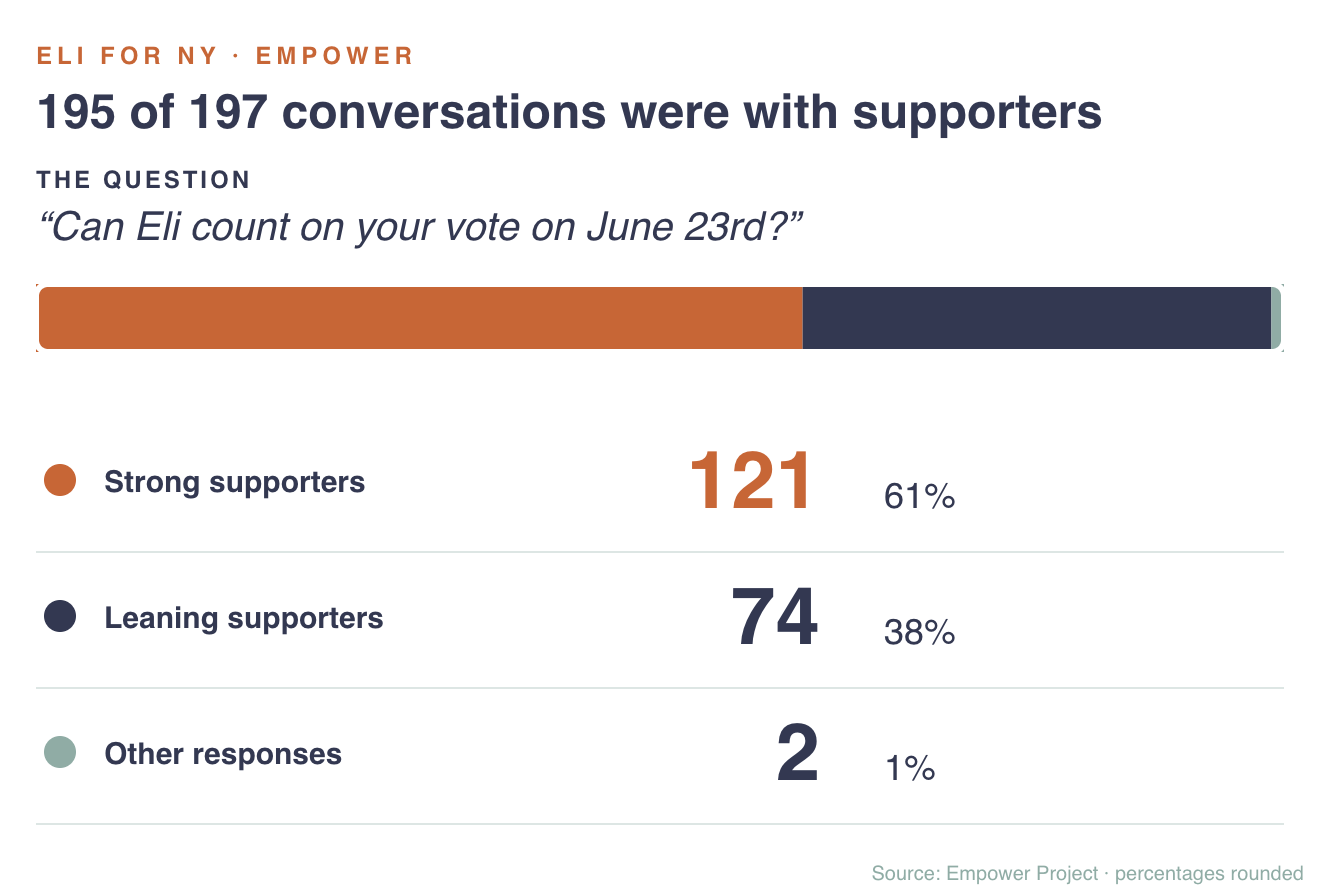
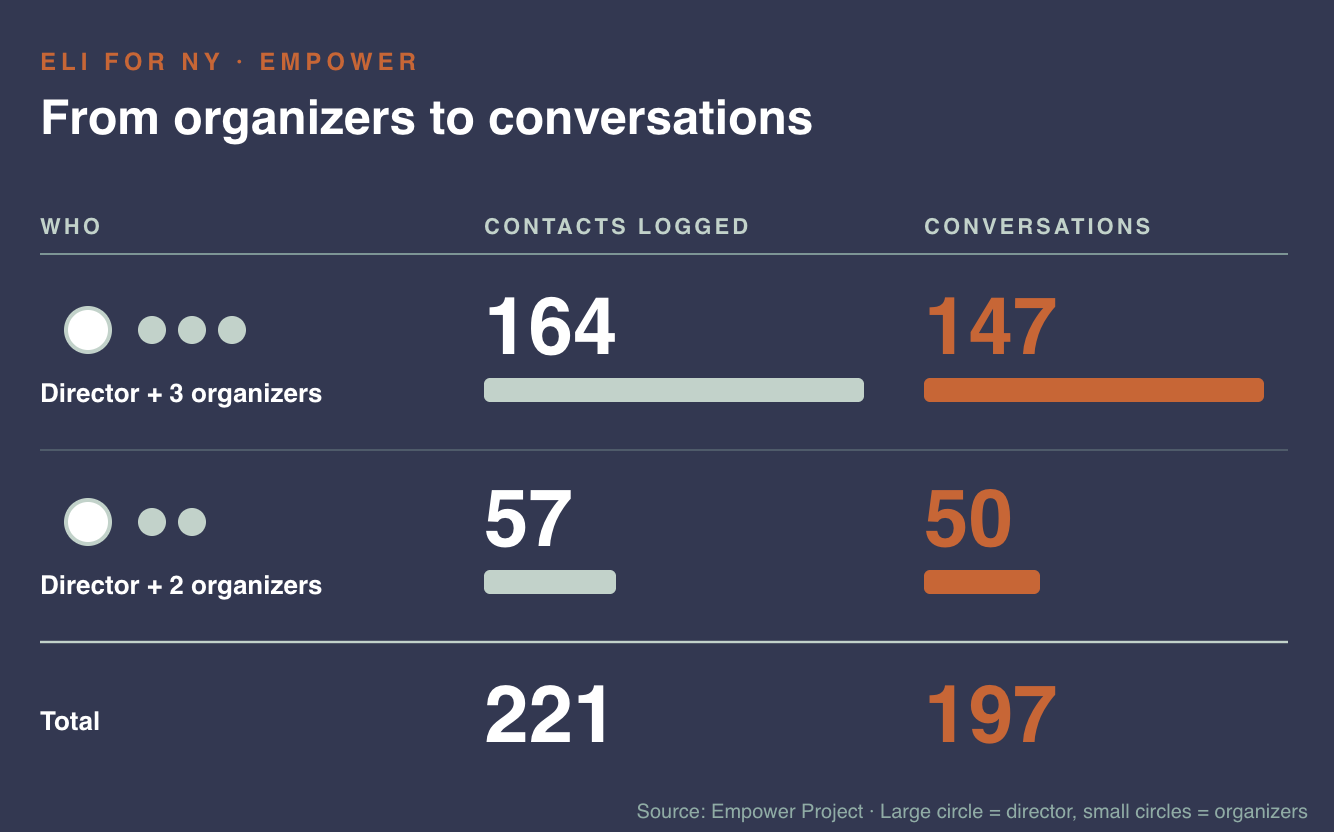
Empower was one part of that effort, and a small one by volume. Eight organizers logged 221 contacts through the app, and 197 of them, the person was a supporter: 121 strong, 74 leaning. The campaign’s own account is that the app’s value wasn’t in the count. It was in the visibility.
Conversations that would have vanished on a crowded sidewalk now showed up in the data, and the team could finally see where it stood against it’s targets.
